Germany’s football kit history: Top 5 iconic shirt designs ranked
Unlike many national teams that prioritize soft, fashion-forward designs to maximize commercial appeal, the German kit has always been a reflection of the nation's core values. Each jersey is a testament to national pride, with every color inspired by or directly mirroring the sacred national flag.
This creates a distinct brand identity that is unmistakable on the global stage. These garments are not designed to be delicate; rather, they are woven with threads of grit, reflecting the tough and resilient character of the German people. The legendary three-stripes logo of Adidas, combined with these uncompromising designs, has become a saga intertwined with the highest honors in football.
To honor this legacy, Goaloomobi takes a deep dive into Germany's football kit history to revisit the classic designs that have captivated fans worldwide.
The evolution of Germany's football kit history
The first notable designs, dating back to the 1912 and 1928 Olympic Games, featured a striking red band across a white base, a look reminiscent of VfB Stuttgart. These early iterations were primarily designed by local manufacturers to instill a sense of discipline and unity.
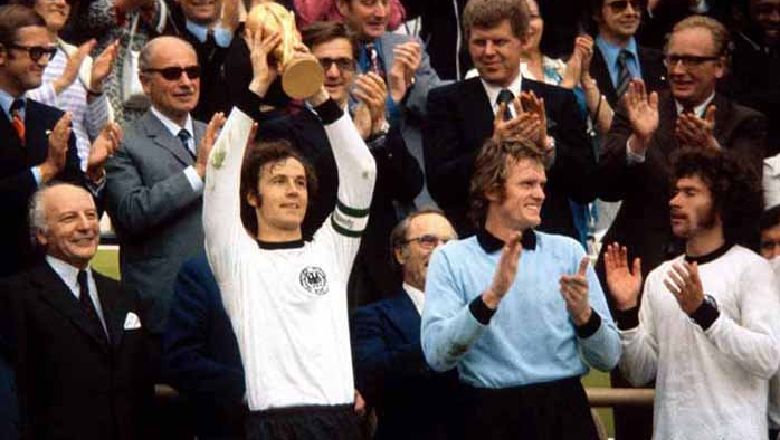
The primary color palette of white and black was established to represent the Prussian colors, chosen for their starkness and authority. Over the decades, these designs have been worn by legends such as Franz Beckenbauer and Gerd Müller, witnessing the team’s transformation into a global powerhouse.
From those early days to the current year of 2026, the kit has evolved through a spectrum of colors. While the home kit remains steadfastly white, the away strips have experimented with green, grey, red, and even "blackout" versions. Green became the iconic secondary color in the 1950s, symbolizing hope and rejuvenation.
A breakthrough occurred in 1988 when designer Ina Franzmann introduced the ribbon-style graphic. Franzmann, a visionary in sports apparel, aimed to translate the team's historical performance into a visual language. This era marked a shift from simple attire to complex storytelling through fabric.
Other radical changes appeared in 2014 with the "Flamengo-style" red and black stripes, designed to symbolize the team's aggression and dominance during their triumph in Brazil. Each modification serves a specific purpose, whether to honor tradition or to project a modern, intimidating image.
Ranking 5 iconic designs in Germany's football kit
5. The 1974 World Cup home kit
Produced under the Erima subsidiary, this kit is the definition of "pristine." Its minimalist white design with a simple black collar provided the backdrop for West Germany’s second World Cup title. It remains a symbol of the "Total Football" era, worn by the incomparable Franz Beckenbauer.
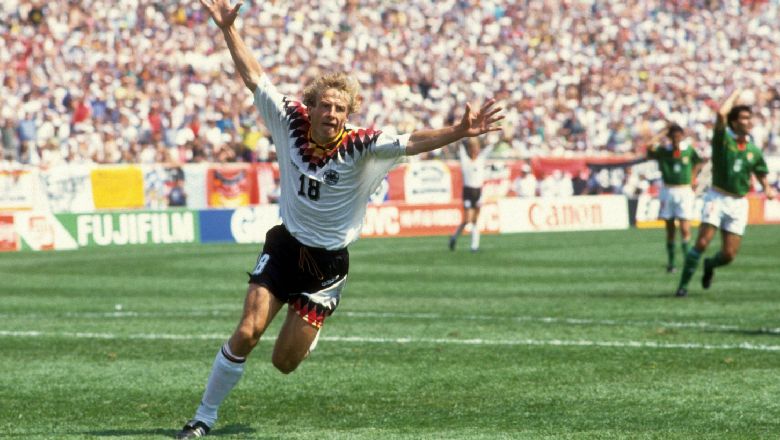
4. The 1994 "Diamond" home kit
This design broke the mold with a cascading diamond pattern across the shoulders. Using a "spray paint" effect popular in the 90s, it showcased the national colors in a vibrant, energetic way. It remains a highly sought-after vintage item, holding significant commercial value today.
3. The 2024 home kit
A modern masterpiece, this kit blends contemporary art with tradition. Its gradient shoulder patterns pay homage to the past while utilizing cutting-edge fabric technology. It has broken recent sales records, proving that the DFB's visual identity remains a massive economic driver.
2. The 1988-1990 away green kit
This is perhaps the most famous secondary kit in history. The bottle-green hue and subtle geometric patterns are synonymous with the 1990 semi-final victory over England. It evokes a sense of nostalgia for a generation that witnessed the reunification of German football.
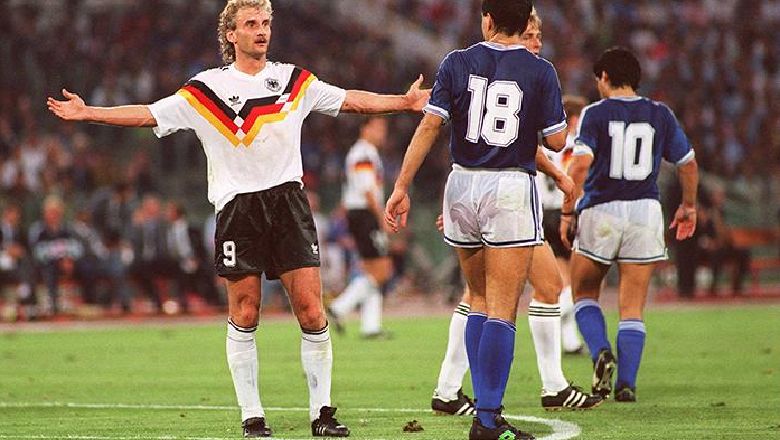
1. The 1988-1990 home kit
Undisputedly the greatest football shirt ever made. The tricolor ribbon graphic across the chest is a work of genius. It witnessed the 1990 World Cup victory and symbolizes the pinnacle of the Adidas-Germany partnership. Its legendary status has made it the most reissued and imitated design in the sports world.
Germany's football kit legacy:
1912-1928: Early experiments with red bands and lace-up collars.
1954-1970: The rise of the white/black dominance and the introduction of iconic green away kits.
1988-1990: The era of the "Tricolour Ribbon," the most iconic graphic in history.
2014: The shift to white shorts and the bold "Flamengo" away stripes for the fourth star.
2024-2026: A return to artistic elegance before the historic move to Nike.
The rich Germany's football kit history captured here by Goaloomobi.net reminds us never to underestimate the power of the white shirt. Facing the tough, resilient, and brave individuals draped in these colors has never been an easy task for any opponent.
Beyond these legends, exploring lesser-known tournaments, rising clubs, or underrated players is a project that Goaloomobi aims to deliver in the future. If you find these insights fascinating, make our website your favorite destination for entertainment. Alongside in-depth articles, we provide a modern sports experience with a platform that constantly updates match schedules for top leagues, real-time results, and comprehensive statistics accompanied by expert pre-and post-match analysis.
The Most Popular
-
 10 most famous Argentina football players ever: Messi carries on Maradona’s legacy
 -
 Who was the captain of Brazil national football team in 2025?
 -
 Brazil all time XI: 2 Pele included, does Neymar deserve a place?
 -
 10 players who played for Chelsea and Barcelona: Lampard’s mentor, Fabregas’ controversial London return
 -
 Is Messi a striker or midfielder?
 -
 Why do football players get cramps so often?
 -
 Why did Mourinho leave Real Madrid?
 -
 How much did Chelsea pay for Mudryk?
 -
 How much did Barcelona pay for Coutinho?
 -
 Can football players bet on football?