
Is Messi a striker or midfielder?
The footballing world has long struggled to categorize Messi. To some, he is the ultimate poacher, to others, the greatest playmaker to ever grace the pitch. He has never been confined to a single tactical box, as his all-knowing left foot and unparalleled spatial awareness make him an exception to every coaching rule.
Defenders find it nearly impossible to mark him because he exists in the "half-spaces", those ghost-like zones between the lines. Just as Goaloomobi seeks to pin down the definitive position of this Argentine genius, we find that the answer is fluid.
Rather than a static label, the question of Is Messi a striker or midfielder? is best answered by tracing the 38-year-old’s legendary evolution through different eras of dominance.
Is Messi a striker or midfielder?
In his youth career at Newell’s Old Boys and Barcelona’s academy, Messi was often deployed as a classic "Enganche", the traditional Argentine number 10. His natural low center of gravity and explosive acceleration made him the heartbeat of the youth teams.
During these formative years, he wasn't just a scorer, he was a creator who dictated the tempo. Coaches at La Masia noted that his vision was so advanced he could see passing lanes before they even opened, a trait that allowed him to bypass older, more physical opponents.
When Frank Rijkaard handed him his first-team debut at Barcelona in 2004, Messi was placed on the right wing. This was a strategic choice to accommodate established stars like Ronaldinho and Samuel Eto’o.
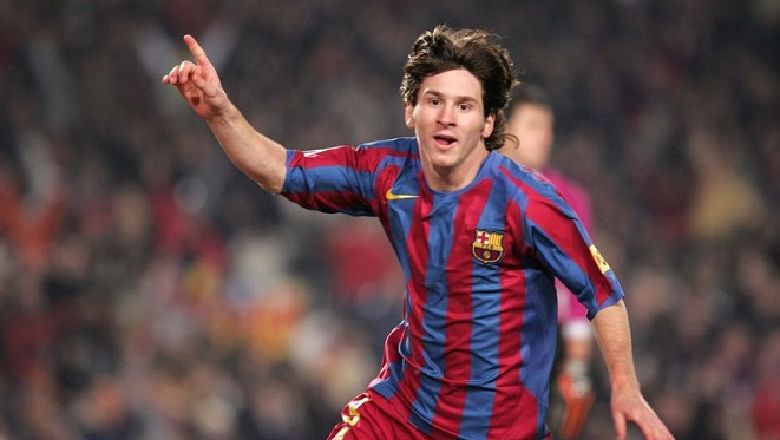
As a young right-winger, Messi utilized his "inverted playmaker" qualities, cutting inside to his left foot to wreak havoc. In this era, he appeared in 110 games under Rijkaard, scoring 42 goals. Even then, he was redefining the winger role by moving into central areas, hinting at the positional flexibility that would define his future.
The most radical shift occurred in 2009 under Pep Guardiola. Before a crucial El Clasico against Real Madrid, Guardiola famously moved Messi into the "False 9" position. This role required Messi to start as a central striker but drop deep into midfield to draw out defenders. This tactical masterstroke led to a 6-2 victory and birthed the most dominant individual era in football history.
Between 2009 and 2012, Messi scored an unprecedented 73 goals in a single season (2011/2012) and won 4 consecutive Ballons d'Or. Guardiola once famously remarked, "Messi is the best player in the world, and he is the best defender, midfielder, and striker all at once." During this phase, he broke the record for most goals in a calendar year (91), proving that even while acting as a midfielder in build-up, he was the world's most lethal striker in the box.
As he matured and Luis Suarez joined the club in 2014, Messi returned to the right wing but with a "free role." Alongside Neymar and Suarez, the "MSN" trio scored 364 goals in 3 seasons. In this period, Messi’s playmaking stats skyrocketed. He was no longer just finishing moves, he was starting them from the halfway line.
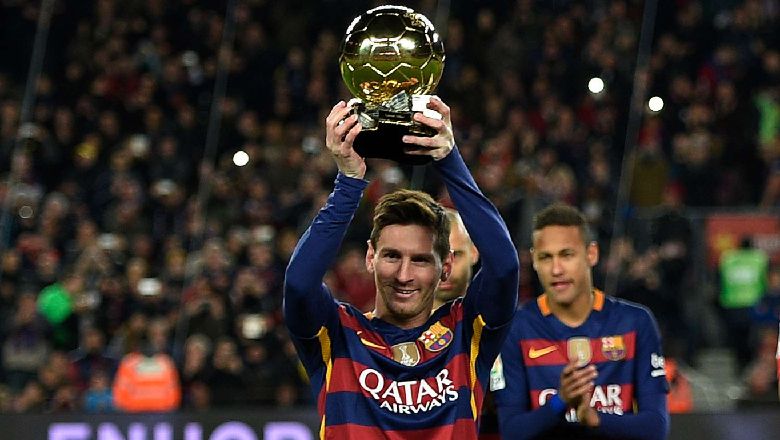
By his final years at Barcelona (2018-2021), he transitioned almost fully into a central attacking midfielder (CAM). He led La Liga in both goals and assists, proving that he could provide the output of a striker from the position of a midfielder.
For the Argentine National Team, Messi’s positional history is equally layered. In the early stages (2006-2014), he often played as a second striker or on the right. However, during the 2022 World Cup, coach Lionel Scaloni utilized him as a roaming playmaker.
Messi spent much of the tournament "scanning", walking for the first 10 minutes to analyze the opposition’s structure before exploiting their weakest link. Despite his age, his 7 goals and 3 assists in Qatar led Argentina to glory. Scaloni noted, "Leo understands the game better than anyone, if he plays as a midfielder, he is the best, if he plays as a forward, he scores." This adaptability allowed him to win the Golden Ball twice (2014, 2022), an unmatched feat.
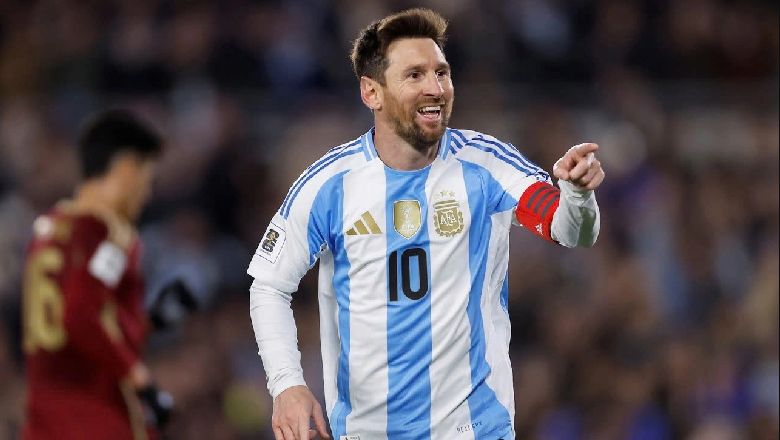
Now at Inter Miami, the evolution continues. In the MLS, Messi often occupies the CAM role in a 4-2-3-1 formation. While his sprinting pace has naturally decreased, his technical ability has remained flawless. He drops deep to collect the ball from the defenders, acts as the primary architect of the attack, and then arrives late in the box to finish.
Since joining in 2023, he has maintained a ratio of nearly 1.5 goal contributions per game, proving that his "football IQ" allows him to transcend physical limitations. Whether he is orchestrating a play from 40 yards out or curling a free-kick into the top corner, he remains the focal point of the team’s offensive identity.
Messi’s tactical roles throughout his career:
Youth/Academy: Traditional number 10 (Enganche).
Early Barcelona (2004-2008): Right winger.
Guardiola era (2009-2014): The pioneering False 9.
MSN era (2014-2017): Free-roaming right forward.
Late Barcelona/PSG (2018-2023): Central attacking midfielder/playmaker.
International/Inter Miami (2022-present): Free role/Elite orchestrator.
Goaloomobi.net has just reviewed all the positions Messi has held in his career to provide the most comprehensive look so that each reader can have their own answer to the question: Is Messi striker or midfielder? To you, in which role does Messi appear most omnipotent on the field?
If you find this topic interesting, make Flashscoremobi your favorite website on your browser. We will continuously provide articles, analyses, and historical recreations that you cannot find anywhere else. In addition, we constantly monitor the situation of the world's leading clubs, match schedules, and results of national championships, while providing objective, multi-dimensional perspectives and valuable statistics before and after every match.
The Most Popular
-
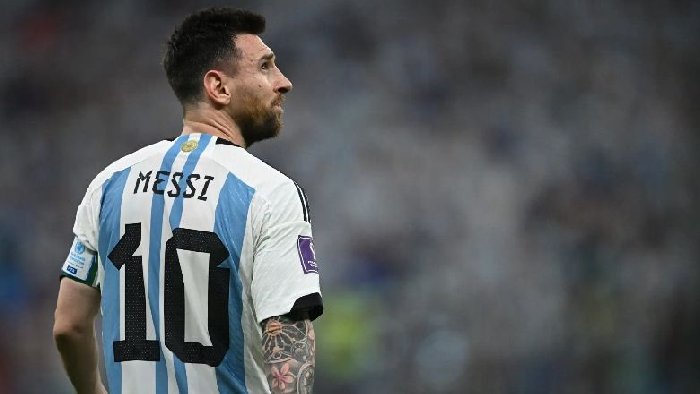 10 most famous Argentina football players ever: Messi carries on Maradona’s legacy
 -
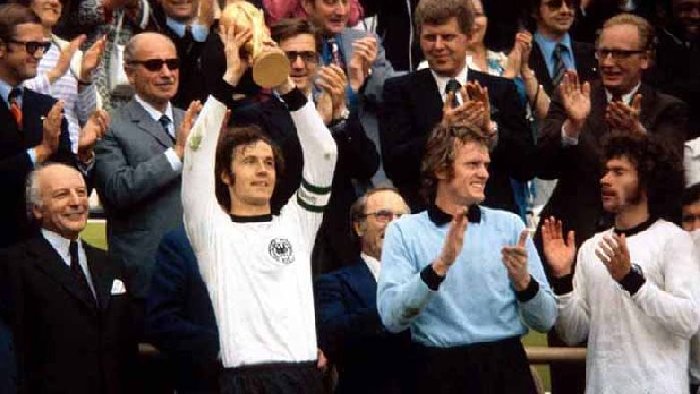 Germany’s football kit history: Top 5 iconic shirt designs ranked
 -
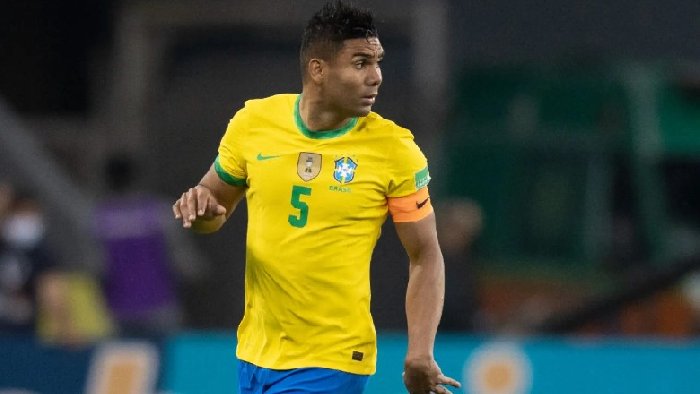 Who was the captain of Brazil national football team in 2025?
 -
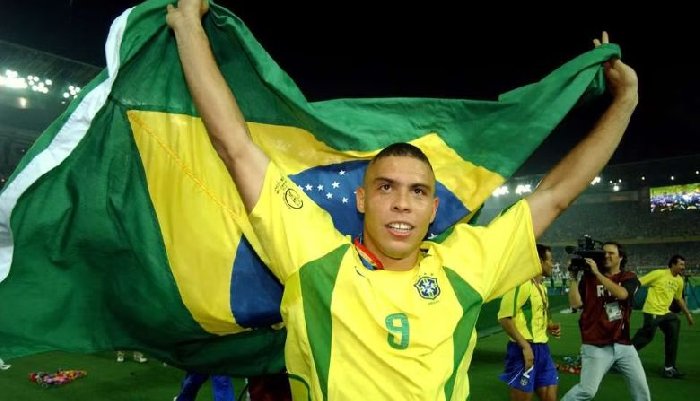 Brazil all time XI: 2 Pele included, does Neymar deserve a place?
 -
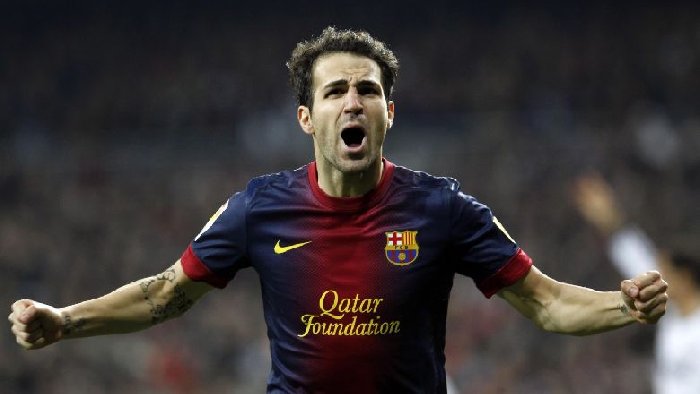 10 players who played for Chelsea and Barcelona: Lampard’s mentor, Fabregas’ controversial London return
 -
 Why do football players get cramps so often?
 -
 Why did Mourinho leave Real Madrid?
 -
 How much did Chelsea pay for Mudryk?
 -
 How much did Barcelona pay for Coutinho?
 -
 Can football players bet on football?