
What is a header in football?
When a team finds itself helpless in the cerebral battles on the turf, the vertical dimension becomes a lifeline, offering a beacon of hope through crosses and set pieces. However, executing a successful header is arguably more challenging than a standard strike with the foot.
A player must contend with limited spatial awareness, a smaller contact surface, and the physical battering of opposition defenders. Despite these disadvantages, football history is punctuated by headers that have altered the course of empires. From World Cup finals to last-minute Champions League winners, the ability to utilize every part of the body, specifically the head, is what separates a good player from a world-class icon.
This comprehensive guide by Goaloomobi will delve into the technical definition of What is a header in football?, offering a blueprint for those aspiring to dominate the air.
What is a header in football?
At its most fundamental level, a header is a technique where a player strikes the ball with their forehead to pass, shoot, or clear it. To execute this properly, a player must connect with the ball using the flat part of the forehead rather than the top of the head to maximize control and minimize the risk of concussion.
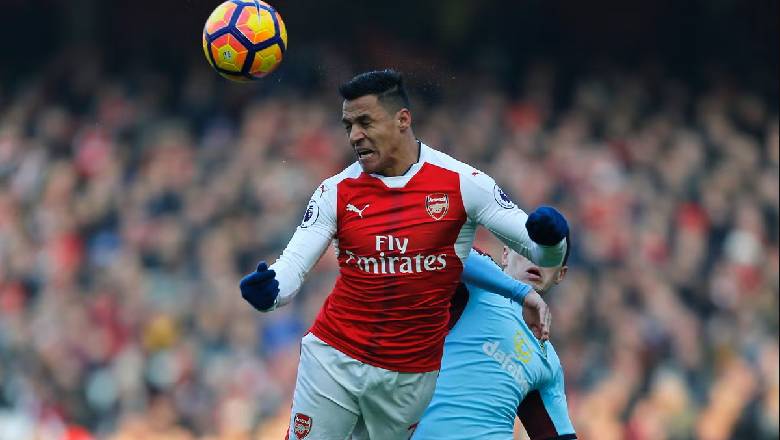
The motion is a full-body engagement; it begins with the feet planting for a leap, followed by the arching of the back to generate torque, and finally, the snapping of the neck muscles at the moment of impact.
In a match, headers serve dual purposes. Defensively, the goal is "clearance", striking the underside of the ball to send it high and wide, buying time for the backline to reset. Offensively, the objective is "direction and power." Strikers often aim for the top half of the ball to drive it downward, making it nearly impossible for goalkeepers to react to the bounce. To excel, a player needs a combination of physical timing, courage, and "spatial intelligence”, the ability to read the ball's trajectory before it arrives.
Cristiano Ronaldo stands as the pinnacle of this craft. With over 112 headed goals throughout his career at clubs like Manchester United, Real Madrid, and Juventus, Ronaldo redefined the "towering header." His secret lies in a vertical leap of 41.7 inches, higher than the average NBA player.
Former teammate Patrice Evra once remarked, "It’s like he freezes in the air, he doesn't just jump, he waits for the ball to arrive." Ronaldo’s training involves intense plyometric workouts and core stability exercises to maintain that "hang time."

Similarly, Peter Crouch utilized his 6ft 7in frame to set a Premier League record with 51 headed goals. Unlike Ronaldo’s power, Crouch relied on "cushioning" and his ability to hold up play for teammates. On the opposite end of the physical spectrum, Javier "Chicharito" Hernandez proved that height isn't everything. Despite being only 5ft 7in, the "Little Pea" scored 52 goals for Mexico and dozens for Man United using an unorthodox technique. His grandfather, Balcazar, taught him the "fox in the box" mentality: "It’s not about how high you jump, it’s about knowing where the defender isn't looking."
We must also mention Christian Vieri, "The Bull," who holds the record for the most headed goals in Serie A history. Vieri combined aggression with a natural instinct to find space. His coaches often noted that his secret was "clenching the teeth and keeping the eyes wide open," a fundamental safety rule that ensures the player sees the target even under physical pressure.
And if you want to find the most iconic moments, 3 headers stand above the rest. First, Zinedine Zidane's double in the 1998 World Cup Final, where France defeated Brazil 3-0. Both goals were near-identical headers from corner kicks, proving that even a midfield maestro must master the air to win the ultimate prize.
Second, Robin van Persie's "Flying Dutchman" header against Spain in the 2014 World Cup. Diving parallel to the ground, he looped the ball over Iker Casillas in a 5-1 victory that shook the world. Ronaldo’s 2019 leap against Sampdoria, where he reached a height of 2.56 meters to power the ball home, securing a 2-1 win for Juventus and a permanent spot in the record books for the highest headed goal in a major league.
Summary of key aerial insights:
Impact zone: Always use the forehead to ensure power and safety.
Defensive goal: Head the ball "up and out" to clear the danger zone.
Offensive goal: Aim for the "top half" of the ball to drive it downward toward the net.
Physicality: Success requires a mix of neck strength, vertical leap, and anticipation.
Legends: Cristiano Ronaldo, Peter Crouch and Chicharito.
In conclusion, this guide by Goaloomobi.net has provided a deep dive into the question: What is a header in football? By understanding these technical nuances and studying the legends of the game, you can transform your aerial game from a weakness into a match-winning weapon. Whether you are clearing a dangerous cross or diving for a last-minute winner, the knowledge of proper heading is essential for any aspiring champion.
Become a smarter fan by checking out our latest tactical reviews and live match results on the official website. Goaloomobi stands for excellence in football reporting, offering objective views for enthusiasts worldwide. Let Goaloomobi be your trusted source for everything football.
The Most Popular
-
 10 most famous Argentina football players ever: Messi carries on Maradona’s legacy
 -
 Germany’s football kit history: Top 5 iconic shirt designs ranked
 -
 Who was the captain of Brazil national football team in 2025?
 -
 Brazil all time XI: 2 Pele included, does Neymar deserve a place?
 -
 10 players who played for Chelsea and Barcelona: Lampard’s mentor, Fabregas’ controversial London return
 -
 Is Messi a striker or midfielder?
 -
 Why do football players get cramps so often?
 -
 Why did Mourinho leave Real Madrid?
 -
 How much did Chelsea pay for Mudryk?
 -
 How much did Barcelona pay for Coutinho?