
What is an indirect free kick in football?
The frequency of indirect free kicks in modern football is remarkably low, making them a rare and captivating spectacle for spectators. You have likely experienced that sudden surge of adrenaline and confusion when a referee points upward and a team’s entire 11-man roster retreats to their own goal line.
The ball is placed deep within the penalty area, mere yards from the net, yet it is not a penalty. This unique tactical standoff often leaves fans with at least three burning questions regarding the legality and execution of the play.
To clear the fog, Goaloomobi will accompany you through the nuances of the rulebook to explain exactly what is an indirect free kick in football?
What is an indirect free kick in football?
An indirect free kick is a method of restarting play where a goal cannot be scored directly by the initial kicker. For a goal to be legally recognized, the ball must be touched by another player, either a teammate or an opponent, before it crosses the goal line.
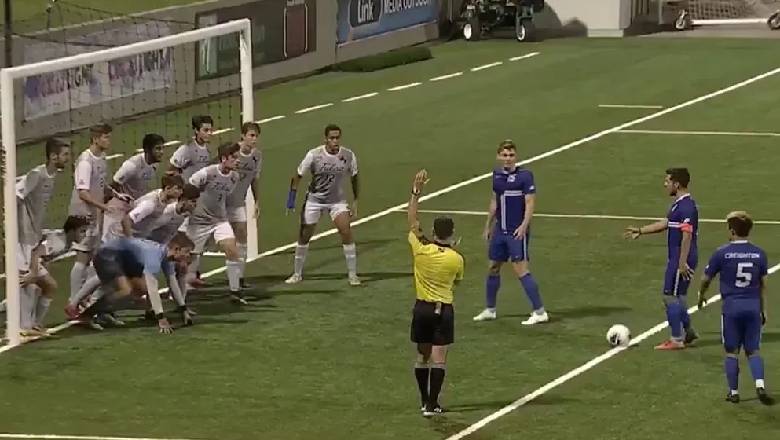
These set-pieces can occur anywhere on the pitch, but their most iconic and chaotic iterations happen inside the 18-yard box. When an offence occurs within the 6-yard box, the ball is moved to the nearest point on the goal area line, which is parallel to the goal line. In these high-stakes moments, the attacking team typically gathers around the ball, while the defending team is permitted to stand on their own goal line between the goalposts if the kick is taken from a distance of less than 10 yards.
The procedure requires the referee to keep one arm raised above their head until the kick has been taken and the ball has touched another player or gone out of play. If the kicker strikes the ball directly into the opponent's goal without any intervening touch, the referee will disallow the goal and award a goal kick to the defending side. Conversely, if a player somehow kicks the ball directly into their own goal from an indirect free kick, a corner kick is awarded to the opposition.
The difference between an indirect free kick and a free kick?
A direct free kick allows a player to score a goal immediately from the stationary position without needing a second touch. These are usually awarded for physical fouls or handball offences committed outside the penalty area.
While the attacking team in a direct free kick scenario often faces a defensive wall situated ten yards away, they have the luxury of aiming directly for the corners of the net. The primary difference lies in the "touch" requirement, whereas a direct kick is a test of pure striking accuracy, an indirect kick is a test of coordination and quick passing.
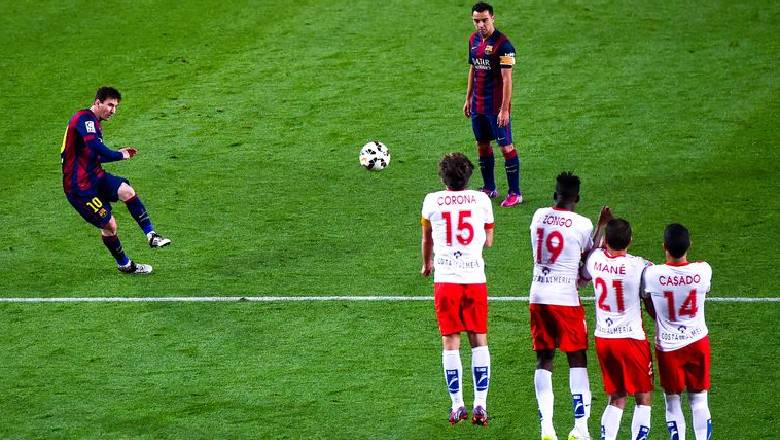
Furthermore, any direct free kick offence committed by a defender within their own penalty area results in a penalty kick, a one-on-one duel from twelve yards, whereas certain technical infractions in that same area only result in an indirect free kick, creating the "wall on the line" scenario previously mentioned.
Which reasons lead to an indirect free kick?
The most frequent cause in the penalty area is the "backpass rule," where a goalkeeper handles the ball after it has been deliberately kicked to them by a teammate. An example of this was recently seen in a Premier League match between Ipswich Town and Wolves, where the goalkeeper used his hands to stop a teammate's pass from trickling into the net.
Other causes include "playing in a dangerous manner," such as a high-footed challenge that does not make contact but endangers an opponent, or "impeding the progress" of a player without physical contact. Additionally, a goalkeeper is penalized if they hold the ball for more than 6 seconds or touch it again with their hands after releasing it before it has touched another player.
Outside of the box, verbal dissent or offensive language toward officials also results in an indirect restart. The penalty for these errors is solely the awarding of the kick itself, though persistent infringement or particularly cynical technical fouls can result in a yellow card for the offender.
History of indirect free kicks?
We have to date back to the late 19th century. The Sheffield Rules in the 1860s initially experimented with various restart methods, but it was the International Football Association Board (IFAB) that formalized these laws to balance the game. The "backpass" amendment in 1992 was perhaps the most significant evolution, introduced after the 1990 World Cup to prevent teams from wasting time by repeatedly passing the ball back to the goalkeeper’s hands. This change dramatically increased the pace of the game and made the indirect free kick a more prominent tactical factor.
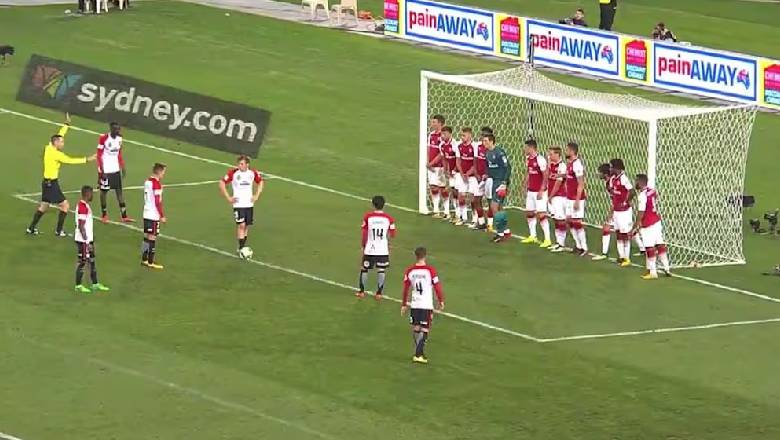
Statistical data suggests that scoring from an indirect free kick is an incredibly difficult feat. In the Premier League, since the 2015/16 season, there have been only 8 such instances inside the box, and remarkably, none have resulted in a goal. The success rate is estimated to be significantly lower than that of direct free kicks, which hover around a 6% to 9% conversion rate depending on the league.
The density of the "human wall" on the goal line makes finding a gap nearly impossible. However, history remembers legendary exceptions. One of the most famous occurred in 2004 when Alan Shearer scored for Newcastle against West Bromwich Albion after a short tap from Nolberto Solano. Another classic example is Gabriel Batistuta’s thunderous strike for Fiorentina against AC Milan in 1998, where the ball was laid off just inches from the goal line and blasted into the roof of the net.
Goaloomobi.net has just defined what is an indirect free kick in football?, explained why it appears, how it differs from a direct free kick, and the specific conditions for a goal to be counted. At first glance, it might seem like a guaranteed goal due to the proximity to the net, but the intricate regulations and the sheer number of defenders make it one of the most sophisticated challenges in the sport.
If you wish to expand your knowledge with more fascinating facts and often overlooked truths in football, do not hesitate to make Goaloomobi your favorite website on your personal browser.
Beyond rule explanations, we are a comprehensive sports platform that continuously updates the most noteworthy information and news from all the leading arenas across the globe. Our objective, multi-dimensional, and unique reviews and analyses offer perspectives you cannot find anywhere else before and after every match.
The Most Popular
-
 10 most famous Argentina football players ever: Messi carries on Maradona’s legacy
 -
 Germany’s football kit history: Top 5 iconic shirt designs ranked
 -
 Who was the captain of Brazil national football team in 2025?
 -
 Brazil all time XI: 2 Pele included, does Neymar deserve a place?
 -
 10 players who played for Chelsea and Barcelona: Lampard’s mentor, Fabregas’ controversial London return
 -
 Is Messi a striker or midfielder?
 -
 Why do football players get cramps so often?
 -
 Why did Mourinho leave Real Madrid?
 -
 How much did Chelsea pay for Mudryk?
 -
 How much did Barcelona pay for Coutinho?