
Who founded Real Madrid?
No club on the planet commands the same gravitas or cultural weight as Real Madrid. Beyond a trophy cabinet that shimmers with unparalleled gold, the club has often acted as a geopolitical voice, bridging nations and serving as a cornerstone for the very existence of elite European competitions.
The leaders of this institution are frequently viewed as footballing emperors, possessing a "royal" aura that demands respect from rivals and allies alike. Currently, the club is presided over by Florentino Perez, the man the media calls "The Godfather." Perez is a master tactician who exudes authority without ever needing to raise his voice, a brilliant mind operating in the high-stakes world of global sports.
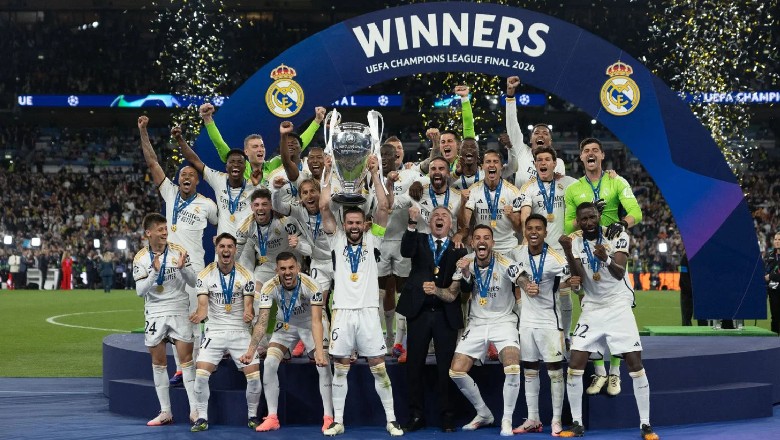
However, to understand this modern greatness, fans of Los Blancos must look back at the humble, and perhaps ironic, origins of the club. Contrary to popular belief, Real Madrid did not begin as a royal entity, and its founders actually originated from the land of their fiercest rivals. Stay with us to answer the question with Goaloomobi: Who founded Real Madrid?
Who founded Real Madrid?
Real Madrid was officially established on March 6, 1902, under the original name "Madrid Foot Ball Club." While it is now the symbol of Spanish nationalism, it was actually founded by a group of fans including 2 Catalan brothers, Juan Padrós and Carlos Padrós.
Juan Padrós served as the first official president, a man whose life was defined by an obsessive passion for the game. Interestingly, despite their Catalan roots, their goal was to create a structured national championship in the heart of the Spanish capital.
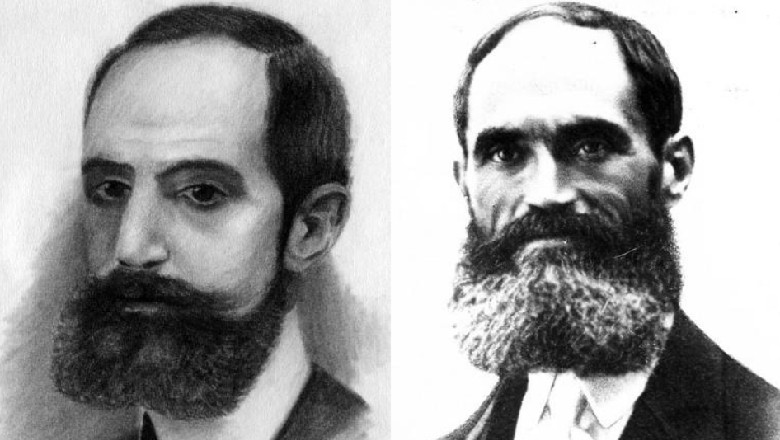
The club’s initial headquarters were located in the back room of their family business, "Al Capricho," a boutique on Calle de Alcalá. The team’s first home ground was the Campo de Estrada, a humble dirt field where players had to change in a nearby tavern.
The first group of players consisted primarily of academics and students, many of whom had been influenced by the English roots of the sport. Their first coach was Arthur Johnson, an Englishman who was instrumental in bringing tactical discipline to the squad. Johnson was a visionary who published the first "technical" instructions for the team, focusing on positioning and team play.
To distinguish themselves, the founders chose an all-white uniform, inspired by the London-based team Corinthian FC, known for its sportsmanship and elegance. The original logo was a simple interlacing of the letters ‘M’, ‘F’, and ‘C’ in navy blue. This aesthetic was a deliberate move toward a clean, professional image that eventually birthed the "Merengues" nickname.
Following its inception, the club’s trajectory shifted from a local Madrid team to a global powerhouse. In 1920, King Alfonso XIII granted the club the title "Real" (Royal), adding the iconic crown to the logo. However, the club faced its darkest hour during the Spanish Civil War (1936-1939). The conflict saw players scattered to front lines and their beloved Chamartín stadium utilized as a prisoner holding area.
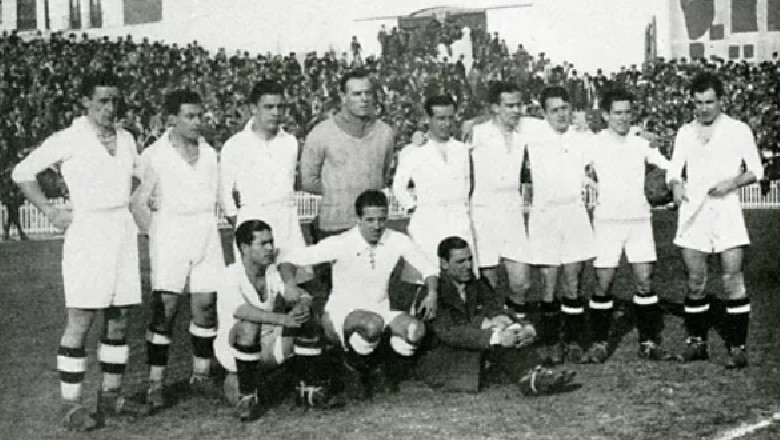
Amidst the ruins, the most influential figure in their history emerged: Santiago Bernabéu. Taking over as president in 1943, he transformed a fractured club into a sporting empire. Bernabéu didn't just rebuild the stadium, he reinvented the transfer market by signing international icons like Alfredo Di Stéfano and Ferenc Puskás. This "Galáctico" philosophy resulted in 5 consecutive European Cups from 1956 to 1960.
Over the decades, Real Madrid has evolved its operational model to become a member-owned entity, a rarity among modern giants. While the logo and kits have seen minor modernizations, the "White" remains sacred. The philosophy has transitioned from the "Hippies" of the 1960s, an all-Spanish squad that rivaled the popularity of the Beatles, to the modern era of tactical flexibility and psychological dominance.
Under various "emperor-like" owners and legendary coaches, the club has set world records for La Liga titles and Champions League trophies, constantly redefining what is possible in professional sports.
Historical highlights of Real Madrid:
1902: Founded by Juan and Carlos Padrós as Madrid Foot Ball Club.
1903: Won the first Regional Championship; laid foundations for the Copa del Rey.
1920: Received the "Real" (Royal) prefix from King Alfonso XIII.
1943: Santiago Bernabéu becomes president, ushering in the modern era.
1955: The stadium is officially renamed Estadio Santiago Bernabéu.
1956–1960: Won 5 consecutive European Cups, a feat never repeated.
1966: The "Ye-yé" team of all-Spanish players won the sixth European Cup.
1998 & 2000: Recognized by FIFA as the Best Club of the 20th Century.
Modern Era: Achieved a "Three-peat" in the Champions League (2016-2018).
This exploration by Goaloomobi.net has finally answered the pivotal question: Who founded Real Madrid? It evolved from a local club into the ultimate representative of the Spanish Crown, a symbol of power, pride, and footballing royalty that is worshipped worldwide.
Make Goaloomobi your favorite browser destination because we will continue to provide unique historical recreations and deep-dive analyses that you won't find anywhere else. Furthermore, we keep a constant pulse on the world's leading clubs, providing up-to-the-minute schedules, league results, and objective, multi-dimensional perspectives. From valuable pre-match statistics to post-match breakdowns, come experience a different world of football with Goaloomobi.
The Most Popular
-
 10 most famous Argentina football players ever: Messi carries on Maradona’s legacy
 -
 Germany’s football kit history: Top 5 iconic shirt designs ranked
 -
 Who was the captain of Brazil national football team in 2025?
 -
 Brazil all time XI: 2 Pele included, does Neymar deserve a place?
 -
 10 players who played for Chelsea and Barcelona: Lampard’s mentor, Fabregas’ controversial London return
 -
 Is Messi a striker or midfielder?
 -
 Why do football players get cramps so often?
 -
 Why did Mourinho leave Real Madrid?
 -
 How much did Chelsea pay for Mudryk?
 -
 How much did Barcelona pay for Coutinho?