
Why do football players get cramps so often?
A muscle cramp is officially defined as an involuntary, forceful, and painful contraction of a muscle that refuses to relax immediately. For professional footballers, this "searing agony" typically strikes the calves, hamstrings, and quadriceps, the engine room of any player. Physiologically, it feels like the muscle has knotted itself into a hard, immovable lump, sending waves of intense pain that can last from seconds to several minutes.
While it might seem like a minor inconvenience to a viewer, for the player, it represents a complete mechanical failure. This phenomenon is not merely a sign of being "tired", it is the result of an entire internal system collapsing under the weight of accumulated stress.

Professional players possess physical foundations far superior to the average person, yet the human body is not a perfect machine, it cannot remain omnipotent forever when pushed to the absolute edge. This deep dive by Goaloomobi seeks to answer the definitive question: Why do football players get cramps so often?
Why do football players get cramps so often?
The occurrence of cramp in elite football is driven by a complex interplay of biochemistry, mechanics, and neurology. As a match progresses, the communication between the central nervous system and the muscles begins to malfunction.
Scientific research into sports physiology suggests that when a muscle is overworked, the "spindles" that cause contraction become hyperactive, while the "Golgi tendon organs" that inhibit contraction become suppressed. This imbalance leads to the muscle firing uncontrollably.
Furthermore, the sheer intensity of the modern game acts as a catalyst. Statistics show that Premier League players now cover an average of 10km to 12km per match, with high-intensity sprints increasing by nearly 30% over the last decade. When players are forced into extra time, playing for 120 minutes instead of the usual 90, their bodies are pushed into an "unconditioned" zone.
Mo Gimpel, Director of Performance at Southampton, explains this reality clearly: “Players cramp up in extra-time because their bodies just aren’t used to playing for 120 minutes.”
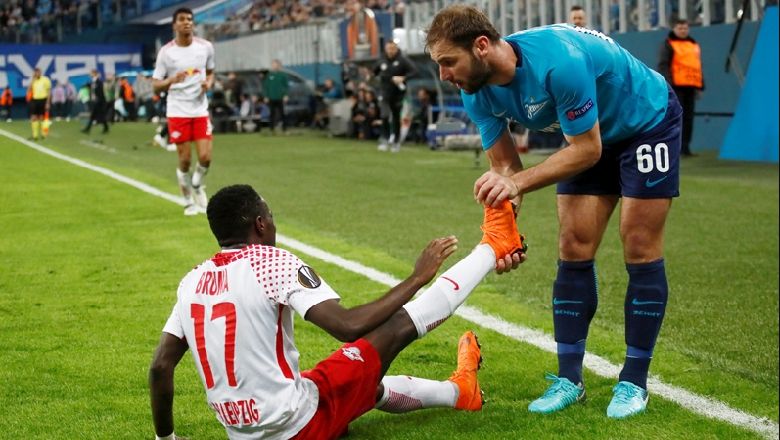
Beyond fatigue, the "salty sweater" phenomenon is a major biochemical factor. Every athlete has a unique sweat profile. Some players lose significantly more sodium, potassium, and magnesium than others. If these electrolytes are not replenished, the electrical signals required for muscle relaxation fail.
Mo Gimpel recalls a specific case: “We had players in the past, Adam Lallana was one of them, who sweated a lot of salt. It took us a while to get on top of it but we added a little salt to his pre-match drink and it sorted it out. Taste your sweat, if it tastes salty you’re probably a salty sweater.”
This highlights that even the fittest players can be sidelined by a simple chemical imbalance if their specific "sweat rate" isn't managed. Additionally, mechanical constriction plays a surprising role. Tight tie-ups around boots, restrictive socks, or overly firm shin-pads can impede circulation and trigger localized cramping.
Gimpel advises that players may need to stretch their socks or loosen their gear before a game to avoid this. Interestingly, age and development also factor in, young players between 17 and 21 often suffer from "growth-related" cramps for no obvious medical reason, a phase they eventually grow out of as their nervous systems mature.
To combat these risks, clubs implement rigorous, data-driven prevention strategies. The first line of defense is progressive strength and endurance training. By gradually increasing the training load, physiotherapists help the players' nervous systems adapt to higher levels of fatigue, reducing the likelihood of the "neuromuscular misfiring" mentioned earlier.
Hydration protocols are now extremely precise, players often undergo "sweat testing" to determine exactly how many grams of sodium they lose per hour. During a match, they consume electrolyte-rich sports drinks or salt tablets at 15-minute intervals. A more modern, albeit unusual, "shock therapy" involves the use of pickle juice.
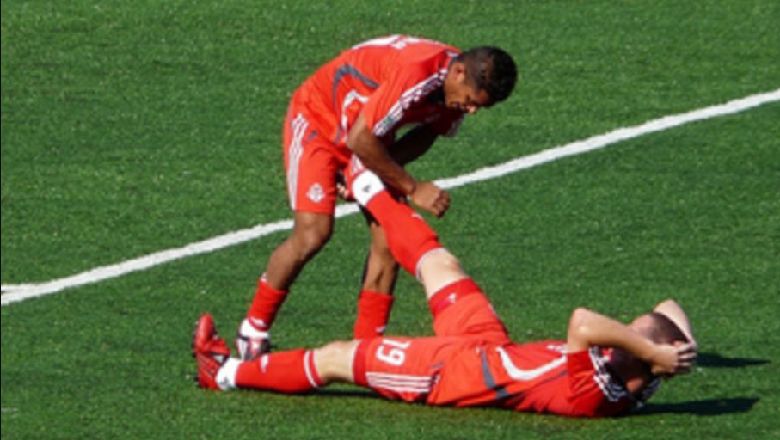
Scientific studies have shown that the acetic acid in pickle juice triggers a reflex in the back of the throat that sends a signal to the brain to shut down overactive neurons in the cramping muscle. This can shorten a cramp’s duration by up to 40%. Famous athletes across various high-intensity sports, including AFL and Premier League stars, have been seen utilizing this method during breaks.
Furthermore, manual therapies like dry needling and myofascial release are performed by club physiotherapists between matches to ensure muscle fibers remain supple and free of "trigger points" that might predispose them to spasms.
Key insights on football cramps:
Neuromuscular misfiring: Overworked nerves fail to tell muscles to relax.
Electrolyte depletion: "Salty sweaters" lose critical sodium, requiring personalized hydration.
The 90-minute limit: Bodies conditioned for standard time often fail during the 120-minute mark of extra time.
Mechanical stress: Tight gear and sudden spikes in match intensity act as immediate triggers.
Age factor: Players aged 17-21 are statistically more prone to unexplained cramping phases.
Rapid relief: Methods like stretching, electrolyte replenishment, and even pickle juice are vital for on-field recovery.
In conclusion, this investigation by Goaloomobi.net has revealed the multifaceted reasons behind the question: Why do football players get cramps so often? In the heat of a fierce battle, where players must sprint, tackle, and exert every ounce of energy for the victory, their muscles are constantly pushed to the absolute limit. In this context, a cramp serves as a vital biological signal, a warning that the body has reached its threshold and it is time to moderate the pace or seek rest.
Moving forward, the mission of Goaloomobi is to provide fresh perspectives on the beautiful game, offering insights into the hidden details of football that many fans might overlook. Our website will continuously update with the latest news on players, clubs, and top-tier leagues, promising to deliver the most engaging and professional viewpoints in the world of football.
The Most Popular
-
 10 most famous Argentina football players ever: Messi carries on Maradona’s legacy
 -
 Germany’s football kit history: Top 5 iconic shirt designs ranked
 -
 Who was the captain of Brazil national football team in 2025?
 -
 Brazil all time XI: 2 Pele included, does Neymar deserve a place?
 -
 10 players who played for Chelsea and Barcelona: Lampard’s mentor, Fabregas’ controversial London return
 -
 Is Messi a striker or midfielder?
 -
 Why did Mourinho leave Real Madrid?
 -
 How much did Chelsea pay for Mudryk?
 -
 How much did Barcelona pay for Coutinho?
 -
 Can football players bet on football?